Chesapeake Pro Locksmith Service Team
Local locksmith team
Jul 20, 2026 14 min read
When you're standing in the hardware aisle at a store on Battlefield Boulevard or getting a quote after a break-in near Great Bridge, the difference between a mortise lock and a cylindrical lock can feel like a foreign language. Both secure doors, but they do it in fundamentally different ways — and choosing the wrong one for your door type, your lifestyle, or your home's existing prep can cost you time, money, and peace of mind. This guide breaks down exactly what sets these two lock families apart, so you can make a confident, informed decision before you buy or before you call a locksmith.
Chesapeake Pro Locksmith works with both lock types every day across Chesapeake, VA — from older colonial-style homes near the Western Branch area to newer construction closer to the Greenbrier corridor. Whether you need a mortise lock set installed on a solid-wood exterior door or a straightforward cylindrical replacement on an interior bedroom door, our trained mobile locksmiths bring the right tools and hardware knowledge directly to your address, 24 hours a day, 7 days a week.
## What Is a Mortise Lock — and How Does It Actually Work?
A mortise lock is a lock mechanism that fits into a deep, precisely cut rectangular pocket — called a mortise — chiseled directly into the body of the door. Unlike a surface-mounted deadbolt or a simple knob-and-latch combo, a mortise lock set is a self-contained unit that typically includes a deadbolt, a spring latch, and often a thumb turn or lever handle, all within one metal case. Because so much of the hardware lives inside the door itself, the visible trim (called the escutcheon plate) is slim and elegant, and the overall system is extremely difficult to kick in or pry apart.
Mortise locks have been standard hardware on commercial buildings and upscale residential doors in the United States for well over a century. Premium brands like Baldwin mortise lock systems and Corbin Russwin mortise lock lines are still widely specified by architects and builders who want long-term durability and a high-end appearance. Many older Chesapeake homes — especially those built before the 1970s — already have mortise pockets in their doors, which means reinstalling a mortise lock set on those doors is often more practical than trying to fill the pocket and retrofit a cylindrical lock. If your door has that tell-tale rectangular slot on the edge, you almost certainly need a mortise-compatible solution.
## Cylindrical Locks: The Modern Standard for Most Residential Doors
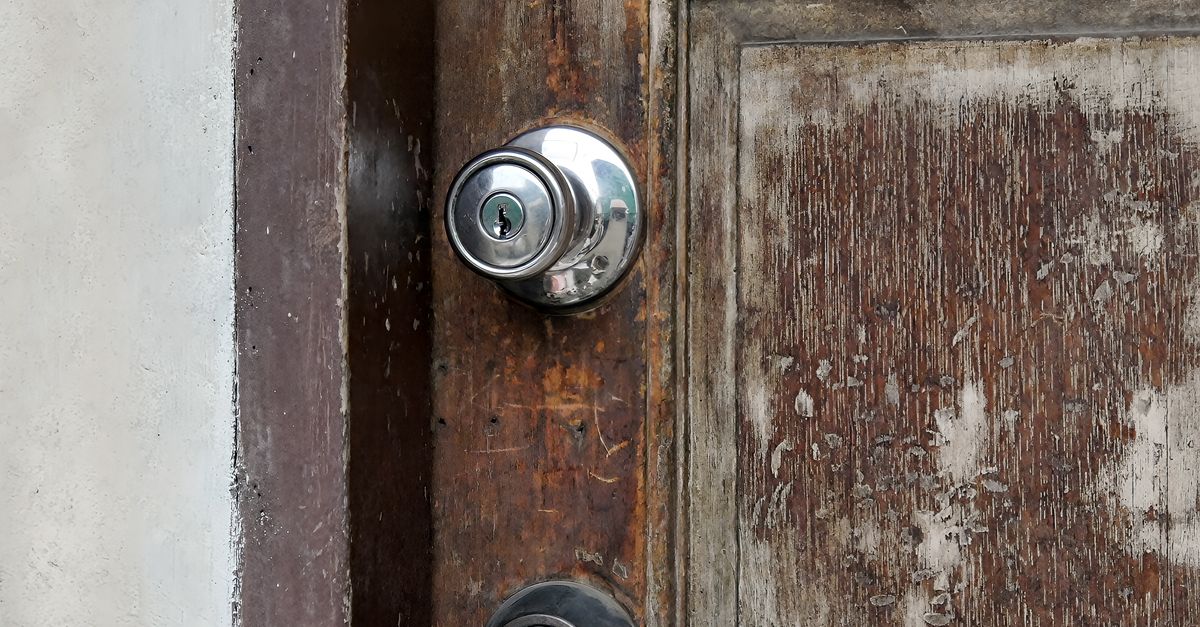
Cylindrical locks — sometimes called tubular locks — are what most people picture when they think of a door knob lock or a standard deadbolt. Installation requires two round holes drilled through the door face and one smaller hole in the door edge for the latch bolt. The hardware ships pre-assembled, and a skilled installer can fit one in a fraction of the time a mortise installation takes. Brands like Schlage and Kwikset have dominated the residential cylindrical market for decades, and replacement parts are widely available.
For interior doors, garage entry doors, and many standard exterior doors built after the 1980s, cylindrical locks are a perfectly strong choice when paired with a properly reinforced strike plate and solid door frame. However, they do have a physical limitation: because the locking mechanism sits inside a relatively small cylinder, the hardware cross-section exposed to attack is smaller but the surrounding door material does more of the structural work. On a flimsy hollow-core door or a frame with shallow jamb depth, even the best cylindrical lock underperforms. This is an important real-world factor our locksmiths assess before recommending hardware, especially on exterior doors where security stakes are highest.
## Mortise Lock vs. Cylindrical Lock: A Side-by-Side Reality Check
Here is where practical homeowner decisions get made. Mortise lock sets shine on thick, solid wood or fiberglass exterior doors — particularly front and rear entry doors on older homes — because the integrated bolt, latch, and handle mechanism distributes stress across a wider area of the door edge. They are also the go-to for commercial locksmith work: office buildings, retail storefronts, and multi-family properties almost universally rely on mortise hardware for its durability under high traffic and its compatibility with key-control systems. A mortise lock cylinder, the removable core inside the case, can often be rekeyed or swapped independently, which is a significant long-term cost and convenience advantage for property managers.
Cylindrical locks win on simplicity, availability, and retrofit ease. If your door was manufactured with standard 2-1/8-inch face bore holes, swapping a cylindrical lock is a quick job that any experienced locksmith can handle in under an hour. They are also the natural pairing for most smart mortise lock alternatives — many smart lock manufacturers design their retrofit kits around the cylindrical format, though true smart mortise lock options from brands like Schlage now exist for those who want smart-home integration without sacrificing the mortise form factor. The bottom line: match the lock type to your door's existing preparation, the door's material and thickness, and your security goals rather than picking hardware purely based on brand recognition or price.
## Choosing the Right Lock for a Mortise Lock Set Exterior Door in Chesapeake
Chesapeake's climate adds a layer of consideration that purely product-focused guides overlook. The area's humidity — particularly through summer months along the waterways near the Intracoastal and into neighborhoods like Deep Creek — causes wood doors to expand and contract seasonally. A mortise lock set on an exterior door needs a case with a robust latch throw and quality finish (typically satin nickel, oil-rubbed bronze, or brass with a lacquer coating) to resist corrosion from salt air that drifts inland from the Chesapeake Bay and the Elizabeth River tributaries. Stainless-steel internal components matter more here than in drier inland climates.
When a homeowner in Chesapeake asks us whether to go mortise or cylindrical on an exterior door replacement, we walk through four questions: What is the door's existing prep — mortise pocket or bored holes? What is the door material and thickness? What is the primary threat profile — opportunistic entry, forced entry, or pick resistance? And does the homeowner want smart-home integration now or in the future? The answers almost always point clearly to one system. If you are unsure, the fastest path to the right answer is a call to our team. We assess the door on-site, confirm the hardware fit, and provide a firm up-front price based on the lock type, any parts needed, and your location — before a single screw turns. Call (757) 785-4657 any time, day or night.
## What Chesapeake Locksmiths Actually Do with These Locks — Services, Skills, and Scope
Understanding lock types is only half the picture. The other half is knowing what a professional locksmith actually handles so you can call with confidence rather than guessing whether your situation qualifies. Our mobile team in Chesapeake covers a wide range of residential, commercial, and emergency locksmith needs, including: mortise lock installation and replacement, mortise lock cylinder rekeying, cylindrical lock installation and replacement, door knob lock repair and upgrade, deadbolt installation on new and existing doors, smart lock installation and programming, high-security lock upgrades, master key system design, commercial locksmith services for offices and retail spaces, emergency lockout response for homes and businesses, lock repair after attempted break-ins, strike plate reinforcement and door frame repair, key duplication from existing keys, key extraction when a broken key is stuck in a lock, lock rekeying after a move or tenant change, padlock and chain replacement, sliding door and patio door lock installation, mailbox lock replacement, cabinet and drawer lock installation, garage door lock and handle replacement, safe lock service and combination changes, access control system installation, keypad and electronic lock installation, door closer installation paired with new lock hardware, and on-site security assessments to identify weak points around your home's entry points. That list reflects the genuine daily scope of what our locksmiths carry tools for on every mobile call across Chesapeake.
A frequently misunderstood area of locksmith work involves questions like what locks can locksmiths not open, and whether a locksmith can make a new key from a lock. The honest answers: most standard residential and commercial locks — mortise or cylindrical — can be opened by an experienced locksmith through legitimate, non-destructive methods like picking or impressioning, though some high-security locks with advanced pin configurations or sidebars are deliberately engineered to be extremely resistant even to trained professionals. That resistance is a feature, not a flaw. As for key-making from a lock, yes — a skilled locksmith can decode many lock cylinders and cut a working key directly from the lock's internal pin configuration, a process called key origination. We verify ownership before performing any such service, which is standard professional practice and the right thing to do.
## Regulation, Training, and What It Means for You in Virginia and Beyond
Homeowners sometimes ask: do you need a license to be a locksmith in Virginia? The current answer is that Virginia does not have a statewide licensing requirement specifically for locksmiths, unlike some other states. This means the bar to calling yourself a locksmith in Virginia is low — which makes it more important, not less, for homeowners to ask about a provider's experience, whether the business carries insurance, and whether technicians have received formal trade training. Chesapeake Pro Locksmith technicians are trained, experienced professionals, and the business is insured, so you have real protection if anything unexpected occurs on the job.
The regulatory picture varies significantly beyond Virginia's borders. In the United Kingdom, locksmithing is also largely unregulated at the national level, though professional bodies such as the Master Locksmiths Association set voluntary skill standards and codes of conduct that reputable UK locksmiths often pursue. Across the United States, states like California, Texas, Tennessee, and Illinois do require locksmiths to hold state-issued licenses, pass background checks, and in some cases post a surety bond. This patchwork of regulation by state and country means that when you hire a locksmith anywhere, verifying their experience, insurance status, and track record is always worthwhile — regardless of whether a license is legally required in that jurisdiction. In Chesapeake, our team's work speaks for itself across neighborhoods from Hickory to Greenbrier, and we welcome your questions before we start any job. What is sometimes called a locksmith call out fee — the charge just to dispatch a technician to your location — varies based on factors like distance traveled, time of day, and the complexity of the job. We roll all relevant factors into a single confirmed price before work begins, so there are no surprises on your invoice.
## Smart Locks, Specialty Hardware, and the Growing Mortise Lock Market
The conversation about mortise versus cylindrical locks has a new chapter in the smart home era. A smart mortise lock combines the structural strength and elegant profile of traditional mortise hardware with Bluetooth, Z-Wave, or Wi-Fi connectivity, allowing keypad entry, remote locking and unlocking, and integration with platforms like Google Home or Amazon Alexa. Brands in this space have expanded their mortise lock lines significantly in recent years, recognizing that homeowners with premium solid-wood front doors don't want to compromise their door's integrity or aesthetics just to gain smart access. If your door already has a mortise pocket, a smart mortise lock upgrade can be one of the cleanest security investments you make.
Specialty lock needs also extend into commercial locksmith territory, where mortise hardware is almost the default. High-traffic doors in offices, clinics, and retail environments need locks that can cycle thousands of times per year without wearing down — and commercial-grade mortise lock sets are engineered for exactly that duty cycle. Corbin Russwin mortise lock hardware, for example, is commonly found in institutional settings precisely because its internal components are rated for far higher use than residential cylindrical hardware. If you manage a commercial property in Chesapeake and are evaluating lock upgrades, our team can assess your current hardware, recommend appropriate commercial-grade replacements, and handle the full installation. For any lock question — residential or commercial, mortise or cylindrical, traditional or smart — call Chesapeake Pro Locksmith at (757) 785-4657. We are available around the clock, every day of the year, and we come to you.
## How to Decide: A Practical Framework Before You Buy or Call
Pull this checklist out the next time you are standing at a door or talking to a locksmith. First, look at the door edge — if there is a rectangular pocket already cut, you need mortise-compatible hardware and should not try to patch and re-bore without professional guidance. Second, measure your door thickness — most residential cylindrical locks fit doors between 1-3/8 and 1-3/4 inches thick, while mortise hardware typically requires a minimum of 1-3/4 inches. Third, consider your security tier — for primary exterior doors in Chesapeake, we generally recommend at minimum a heavy-duty deadbolt paired with a reinforced strike plate regardless of which lock family you choose. Fourth, think five years ahead — if smart home integration is on your horizon, confirm that the lock you choose today is compatible with or upgradeable to smart technology. Fifth, ask about rekeying — if you are moving into a new home or a rental property, rekeying existing locks is almost always more practical and cost-effective than full replacement, and both mortise and cylindrical locks can be rekeyed by an experienced locksmith.
The goal of this guide is to give you enough real knowledge to have a productive conversation with a locksmith rather than relying on guesswork or generic online advice. If you're in Chesapeake and still unsure which direction makes sense for your door, our team can walk you through it in minutes. We'll look at what you have, tell you honestly what we recommend and why, confirm the exact price up front, and get the work done right the first time. Call (757) 785-4657 — we answer 24/7.
Frequently asked questions
What is a mortise lock, and is it better than a regular deadbolt?+
A mortise lock is a complete locking mechanism — including a deadbolt, spring latch, and handle — housed in a metal case that sits inside a rectangular pocket cut into the door's edge. Because the hardware is embedded in the door body rather than surface-mounted, it is generally more resistant to forced entry than a standard cylindrical deadbolt, especially on solid wood or fiberglass exterior doors. Whether it is the better choice for your specific door depends on your door's existing preparation, thickness, and material. A trained locksmith can assess your door in minutes and tell you exactly which system is the right fit.
Can a locksmith make a new key from a lock if I've lost all my copies?+
Yes, in most cases. A skilled locksmith can decode the internal pin configuration of a mortise lock cylinder or a cylindrical lock without a working key — a process called key origination or key impressioning — and cut a new key on-site. This works for the majority of standard residential and commercial lock types. The locksmith will verify that you are the owner or authorized occupant before performing this service, which is standard professional practice. If you are in Chesapeake and need a key made from your lock, call (757) 785-4657 and we can usually handle it the same day.
What is a locksmith call out fee, and how is pricing determined?+
A call out fee refers to the base charge a locksmith applies simply to dispatch a technician to your location, separate from the actual labor or parts cost. Pricing for locksmith services depends on several factors: the type and complexity of the lock or job, the time of day (overnight and weekend calls typically carry different rates), travel distance to your location, and any parts or hardware needed. At Chesapeake Pro Locksmith, we confirm a single, exact up-front price before any work begins — so you know the full cost before you commit, with no hidden charges added afterward.
Do you need a license to be a locksmith in Virginia, and how do I know I'm hiring a qualified professional?+
Virginia does not currently require a specific statewide locksmith license, which means the responsibility falls on the homeowner to vet any provider they hire. The most important things to look for are verifiable experience, proof that the business is insured, and a willingness to answer questions transparently before starting work. Ask how long the technician has been working on the specific lock type you need serviced, whether the company is insured, and whether they provide a confirmed price before beginning. At Chesapeake Pro Locksmith, our technicians are trained and experienced professionals, the business is insured, and we always confirm pricing up front — giving you real confidence before we touch your door.